
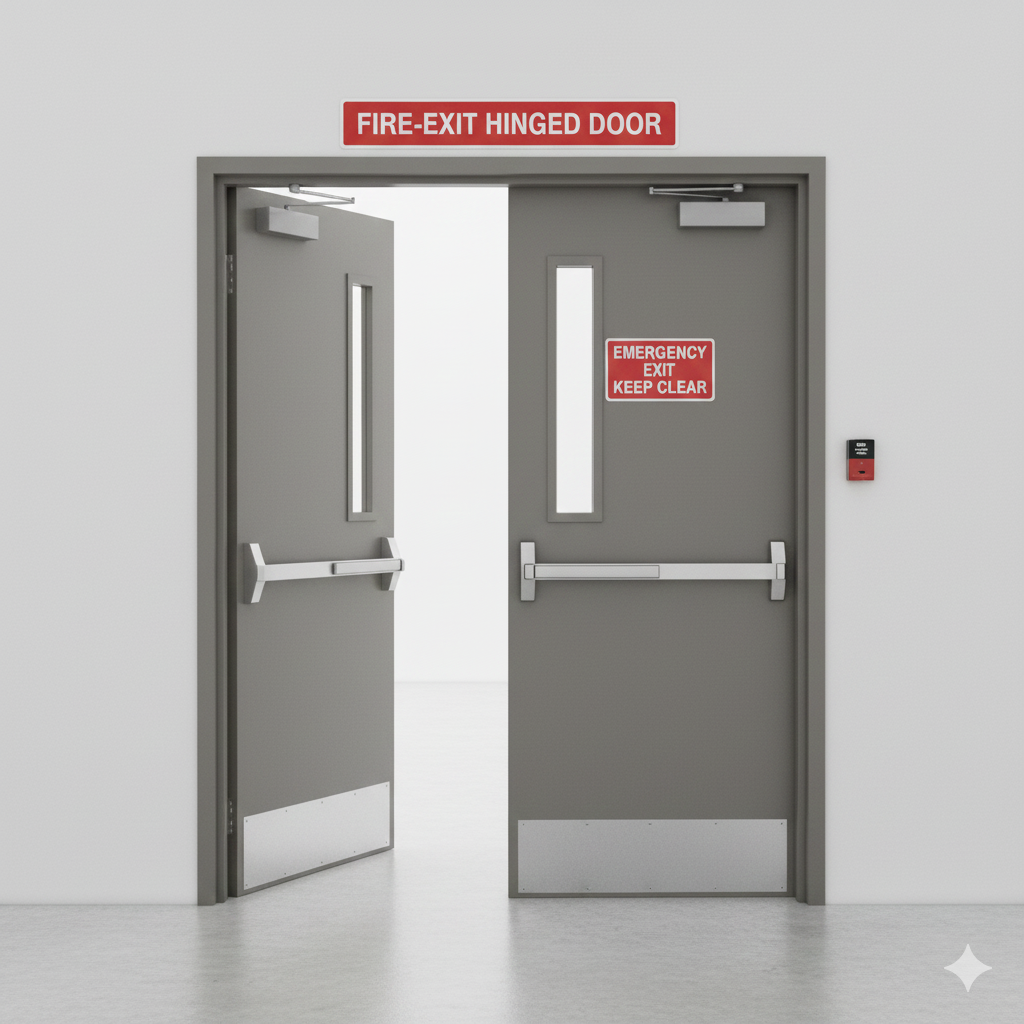
Fire-Exit Hinged Door
A fire-exit hinged door is a specialized door that must open outward in the direction of escape and is equipped with panic hardware (like a push bar) to ensure it opens immediately and easily with a single, unhindered action from the inside during an emergency. It is designed for rapid, safe evacuation from a building to a place of safety.
Share:
Ensuring Safety and Rapid Evacuation
A fire-exit hinged door is an indispensable safety feature, specifically designed to facilitate quick and secure evacuation during emergencies. Constructed with outward-opening functionality, it ensures a seamless exit path during high-stress situations, minimizing delays. The push bar, often referred to as panic hardware, is ergonomically designed to allow immediate opening with a single, unhindered action from the inside, meeting the stringent safety standards required for public and private buildings alike.
Key Features of the Fire-Exit Hinged Door
One of the standout aspects of the fire-exit hinged door is its reliable efficiency. It combines durability with practicality, making it essential for high-activity environments like office buildings, schools, shopping malls, or healthcare facilities. Its outward-opening mechanism reduces risk by preventing inward obstruction, ensuring smooth evacuation. Additionally, the panic hardware enhances usability, even in crowded or chaotic circumstances, providing peace of mind to users and administrators.
Crafted from robust materials, these doors are built to withstand wear and tear while maintaining superior fire-resistant properties. Many models are corrosion-resistant, low-maintenance, and finished with coatings that enhance longevity, making them both sustainable and cost-effective over time.
Why Choose a Fire-Exit Hinged Door?
Having a fire-exit hinged door installed is more than just a compliance measure – it is a proactive commitment to safety. By providing unobstructed access to a means of escape, these doors ensure that occupants of a building can swiftly reach a safe zone in moments of crisis. Whether for new construction or retrofitting into existing structures, the inclusion of a fire-exit hinged door not only enhances safety standards but also adds an essential element of reassurance for employees, visitors, and tenants.
The importance of a reliable, outward-opening fire-exit door cannot be overstated in modern safety protocols. A well-constructed door with intuitive design and functionality is more than just a safeguard; it is an integral part of any building’s emergency response system, ensuring compliance with safety regulations and, more importantly, protecting lives.
Key Operational Requirements:
-
Direction of Swing: The door must be side-hinged and always swing outward in the direction of the escape travel. This prevents a panicked crowd from becoming wedged against the door and blocking the exit.
-
Panic Hardware (Egress Mechanism): The door must be equipped with panic hardware (a panic bar or crash bar) on the interior side. This is a horizontal bar that, when pushed (even lightly or with body weight), instantly and simultaneously releases the latch(es) across the door’s full width.
-
Keyless Egress: The door must be readily openable from the egress side without the use of a key, special knowledge, or tools. The mechanism must function even if the door is locked from the outside.
-
Self-Closing: Most fire-exit doors are required to be self-closing (using a door closer). This ensures the door shuts immediately after use to help contain fire and smoke within the compartment, protecting the escape route.
-
Unobstructed Path: The door, and the path leading to it, must never be blocked by furniture, equipment, or decorations.
Construction & Material:
-
Materials: Fire exit doors are typically constructed from metal (like mild steel, galvanized steel, or stainless steel) set in reinforced metal frames, as metal is highly resistant to heat and warping, offering greater forced-entry resistance than wood.
-
Hinges: Because the door swings outward (exposing the hinge pins on the exterior), the hinges must be secured with non-removable pins or security studs to prevent the door from being removed for illegal entry.
-
Fire Rating (Optional, but common): While the term “fire-exit” mainly refers to egress, the door assembly itself may also carry a fire rating (e.g., FD30, FD60, FD120) to withstand fire for a specific duration, slowing the spread of the blaze.
In summary, a fire-exit hinged door is a robust, code-compliant product built for one ultimate purpose: saving lives by facilitating the fastest, safest escape route possible.
Related products


Reviews
There are no reviews yet.